Los que vienen del desierto
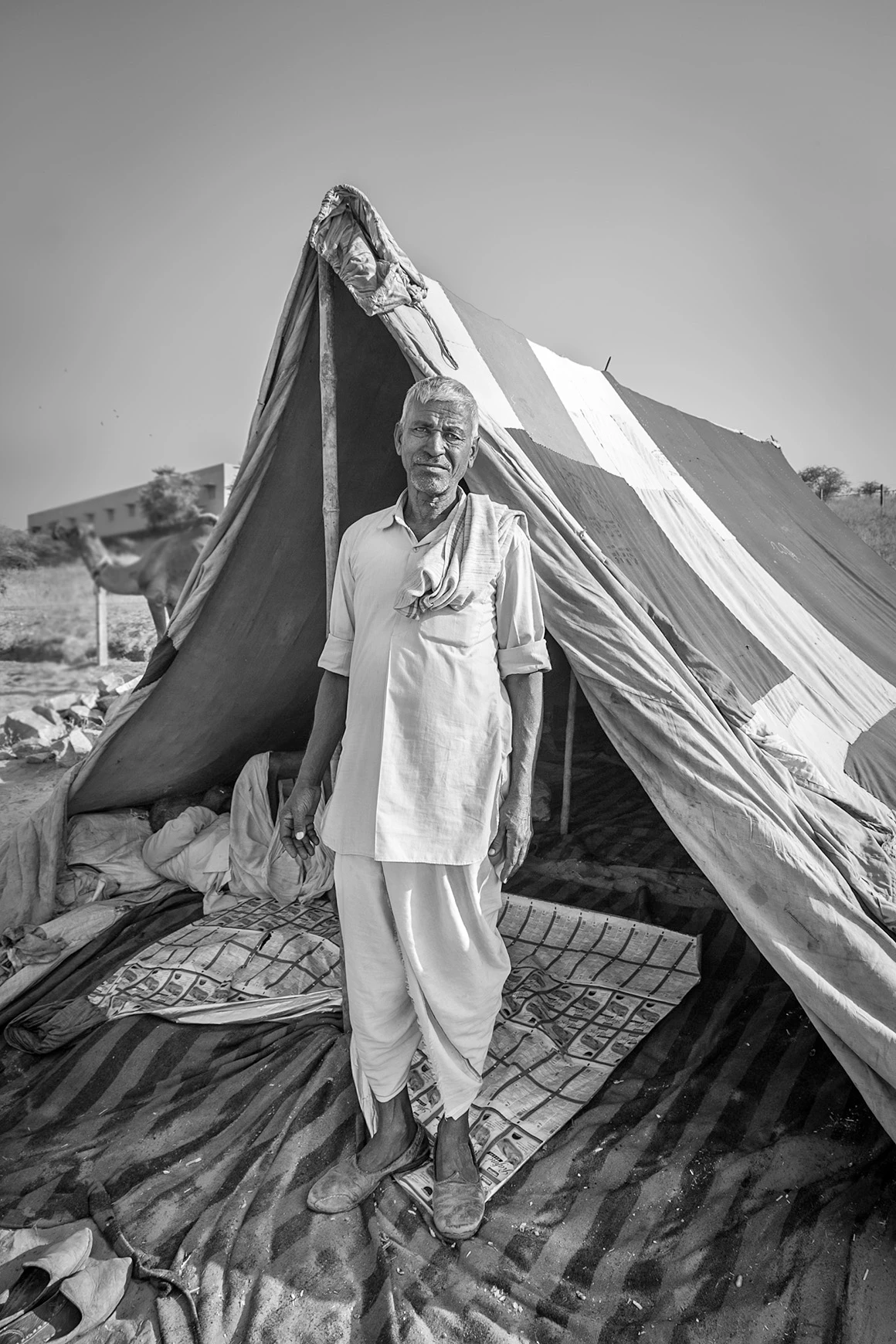
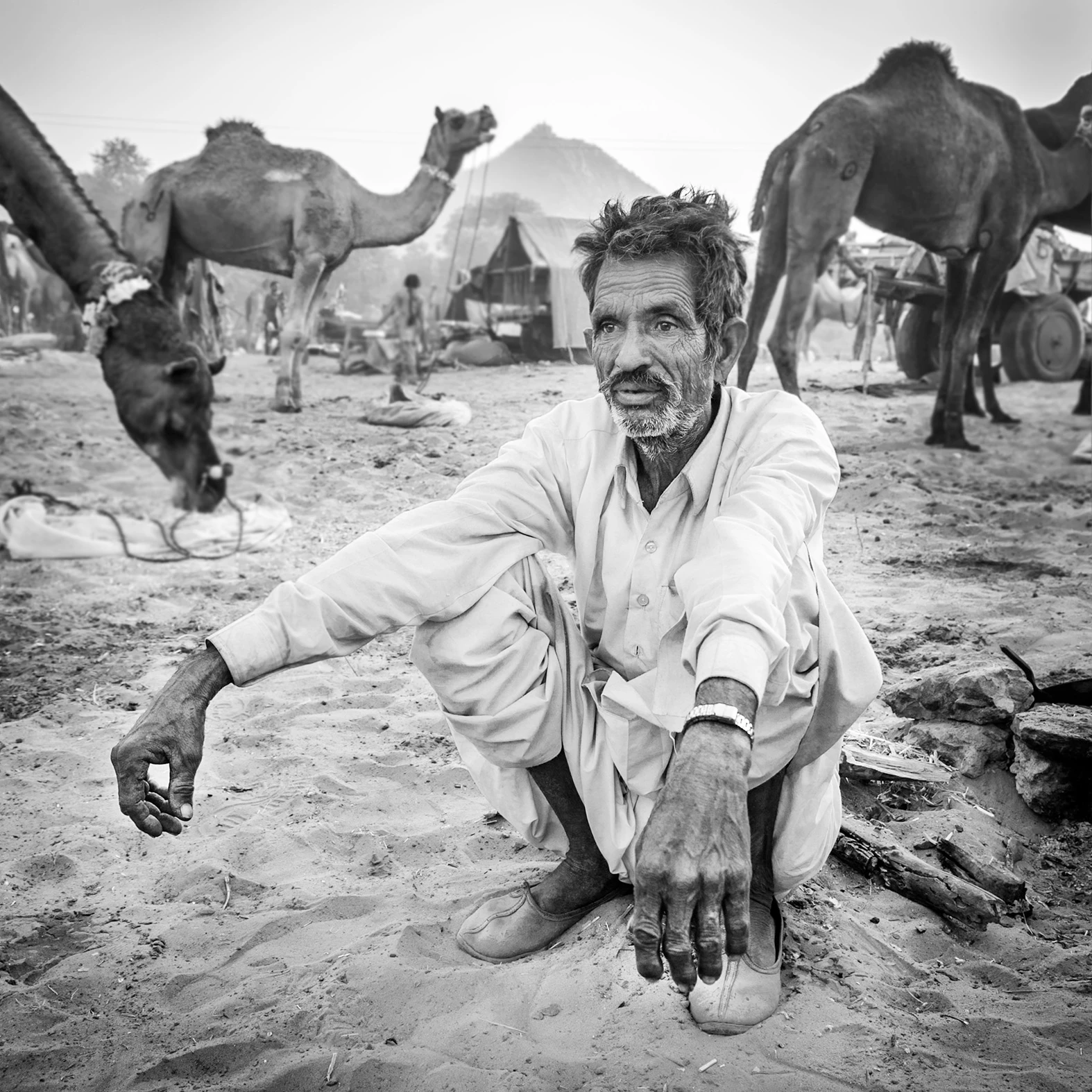
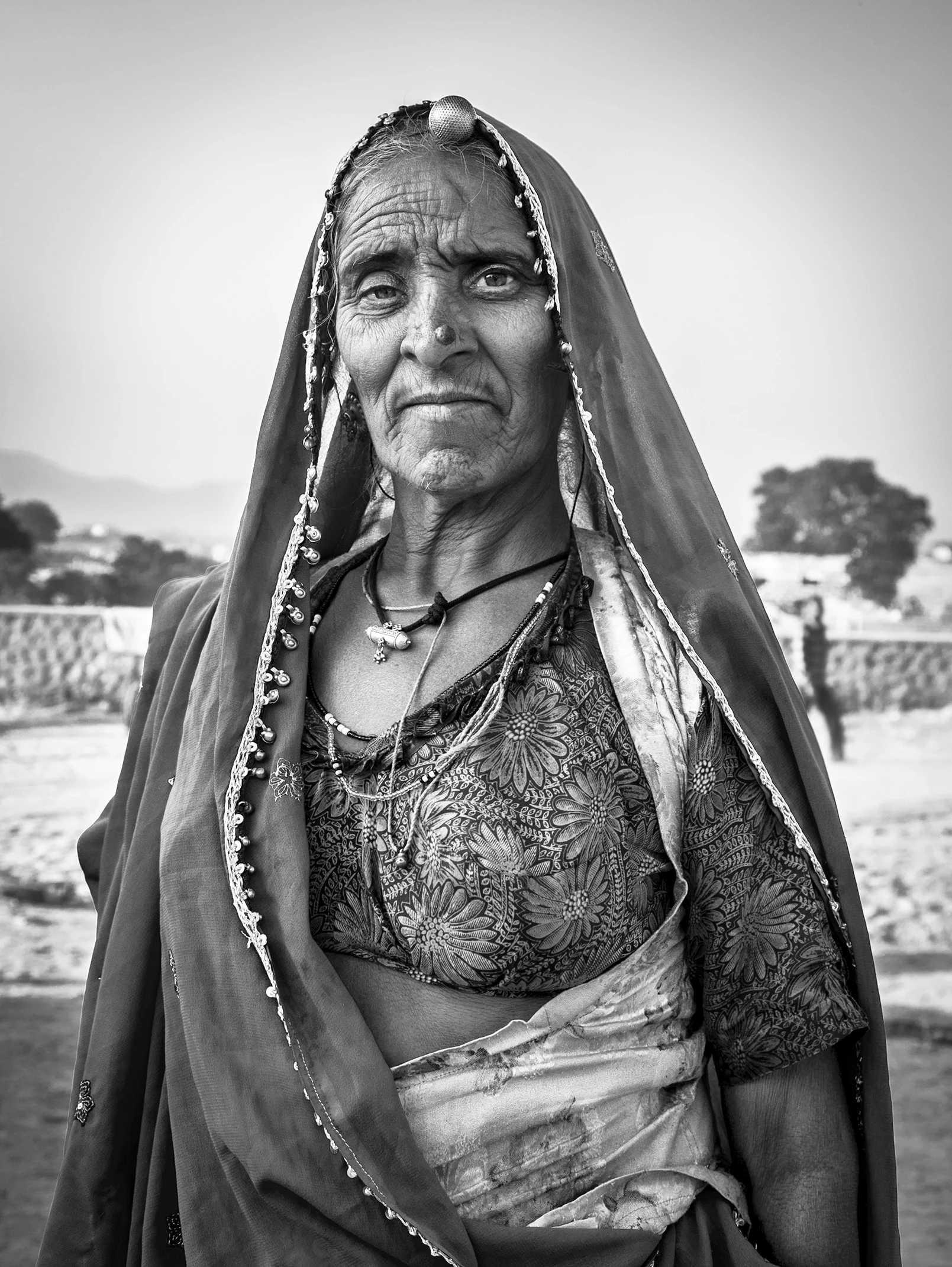
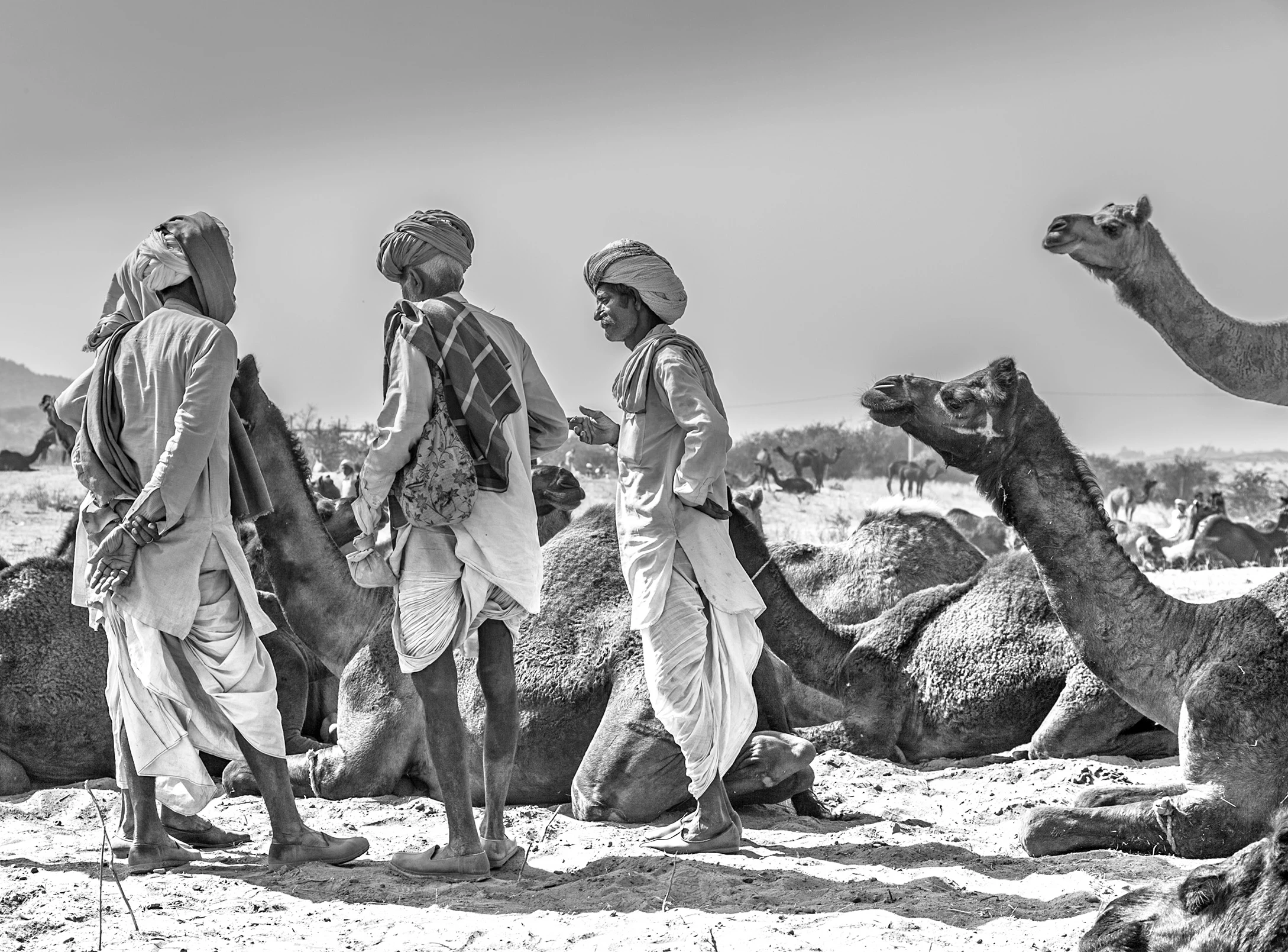
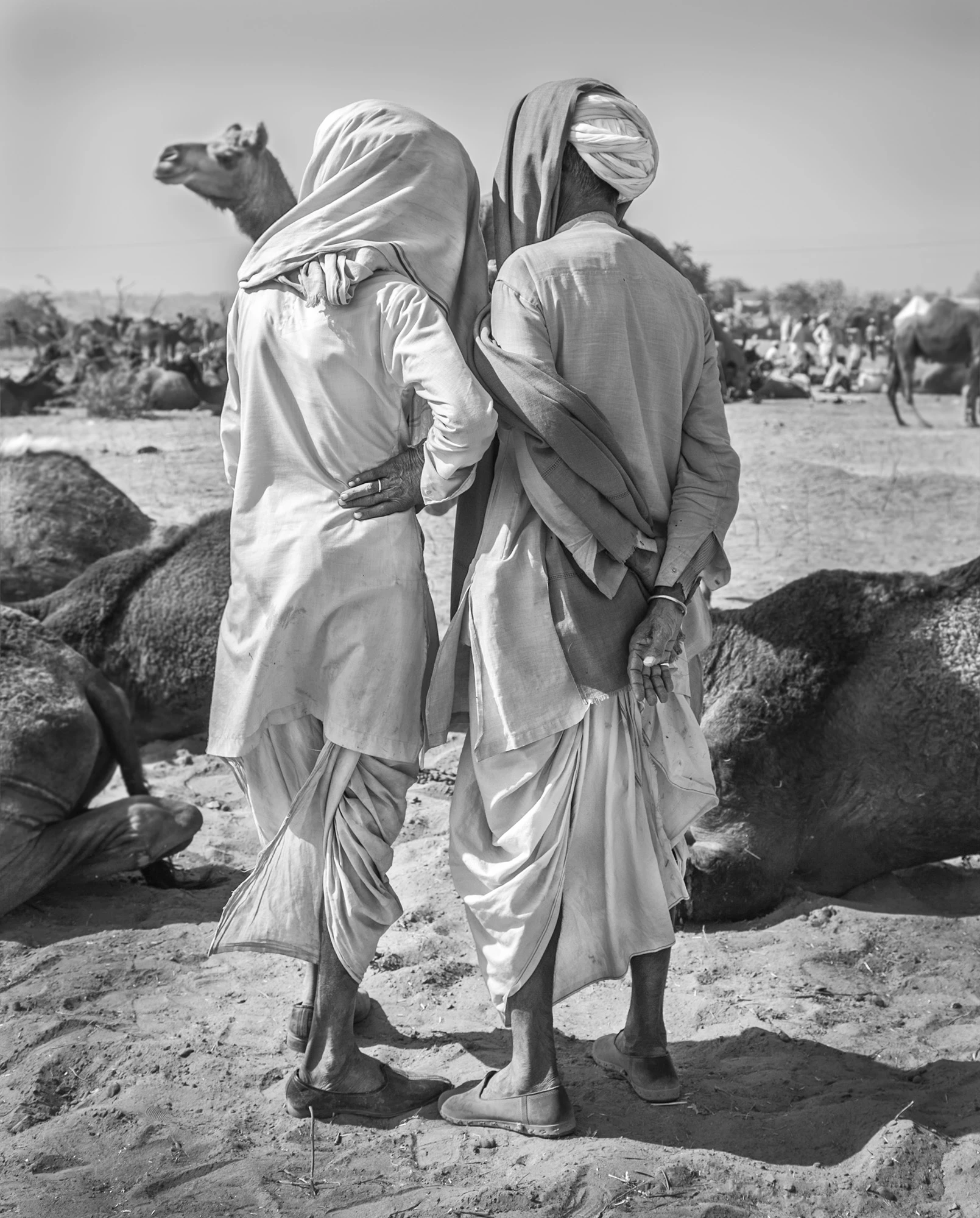
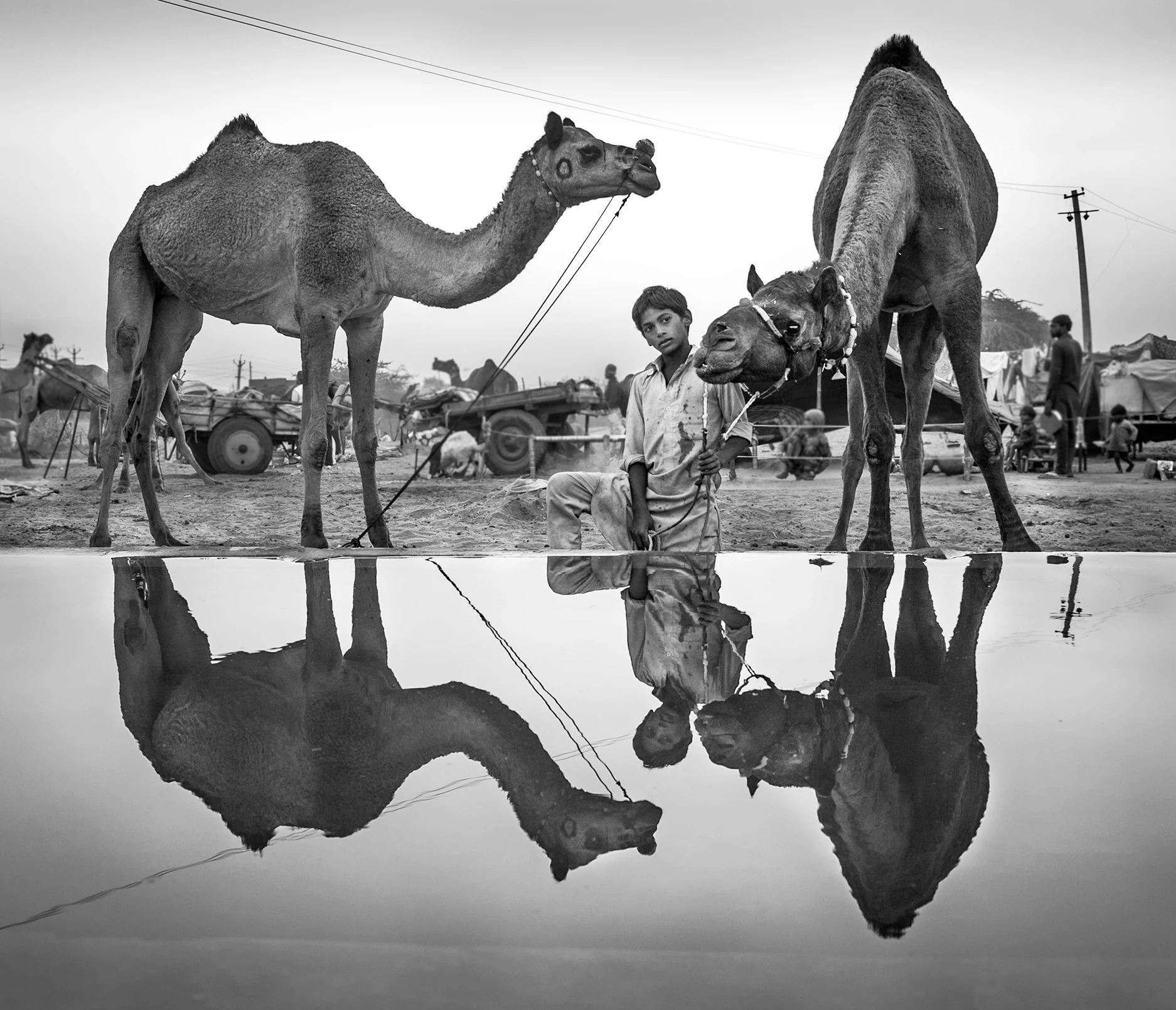
En el horizonte del desierto del Thar, al amanecer, empiezan a divisarse unas siluetas alargadas con turbantes sobre la arena, siluetas que avanzan despacio. Son los Raikas, pastores nómadas que llevan repitiendo este mismo camino durante generaciones.
+ más información — menos información
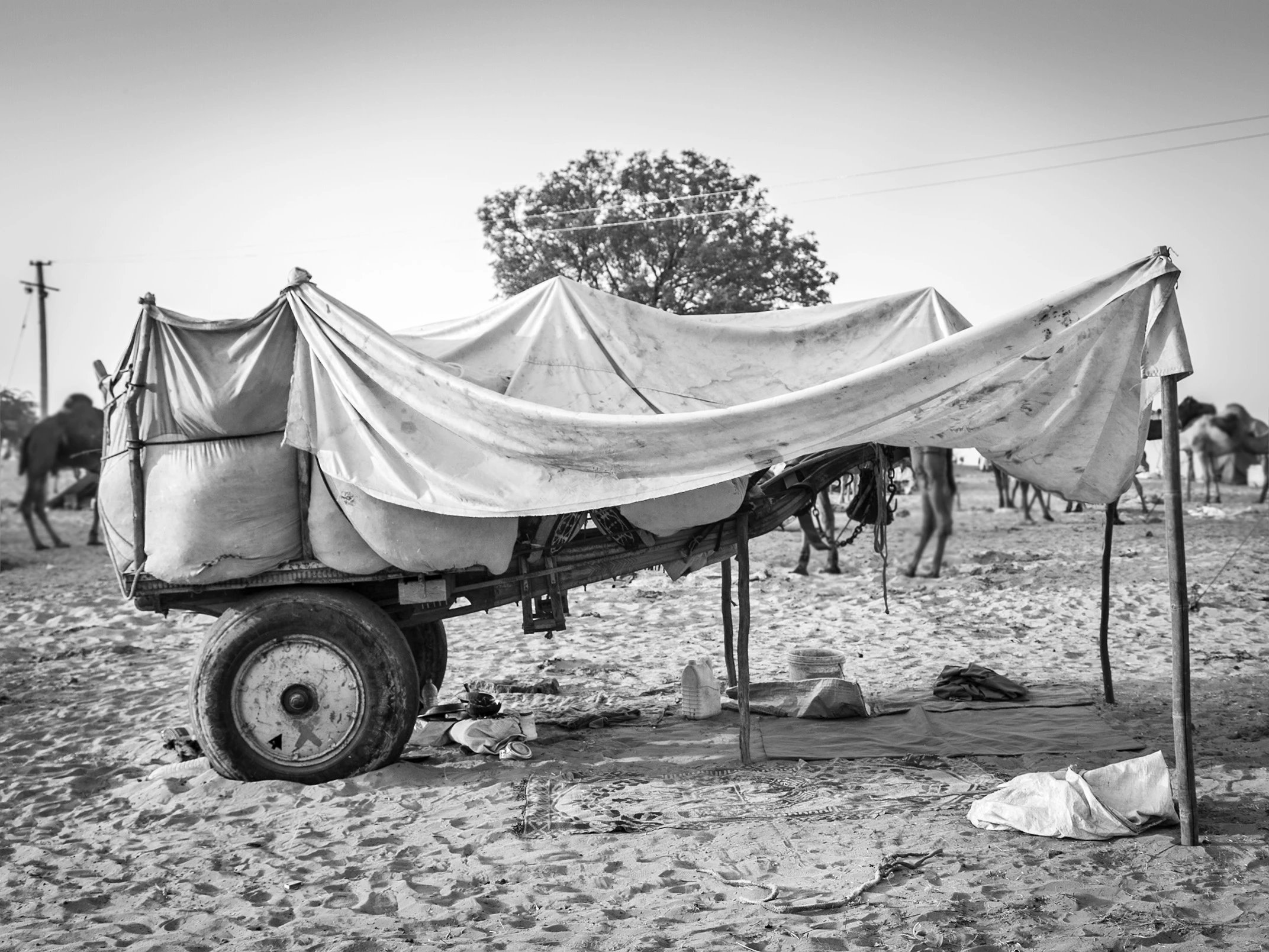
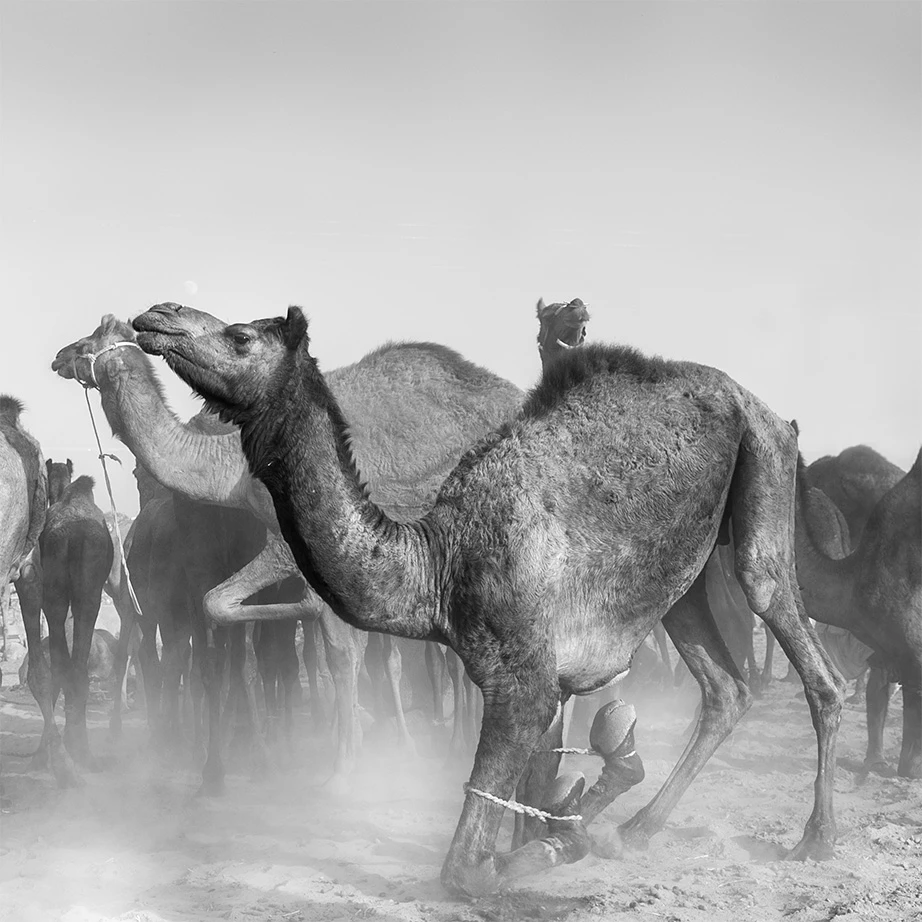
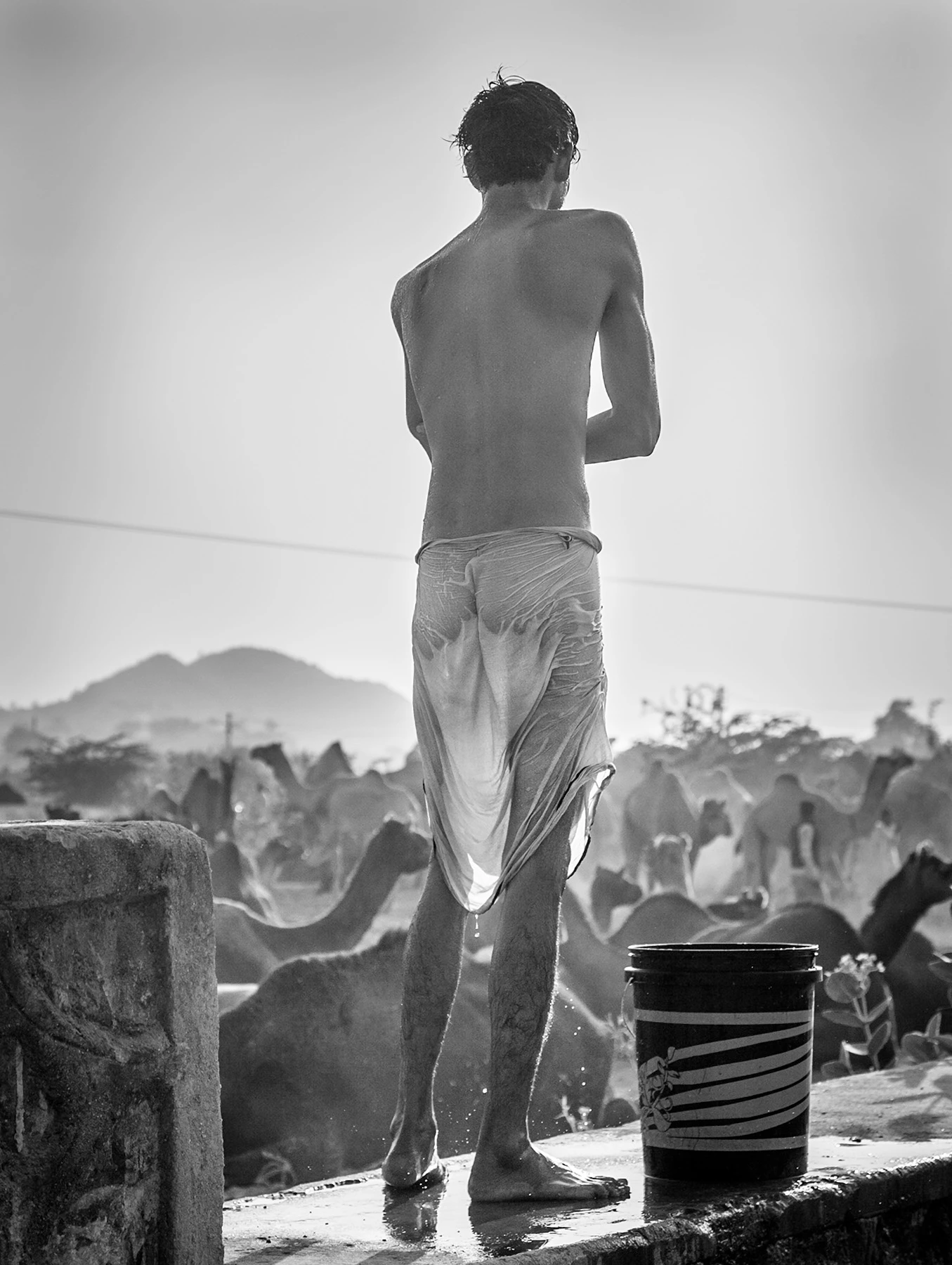
Se dirigen a Pushkar, a la feria de camellos más grande del mundo. Llegan desde aldeas lejanas, y antes de que amanezca ya han montado sus campamentos en las dunas que rodean la ciudad sagrada: una ciudad efímera de carromatos y mantas tendidas como tiendas, con fogatas encendidas y vida propia durante una semana entera. La feria comienza con su llegada.
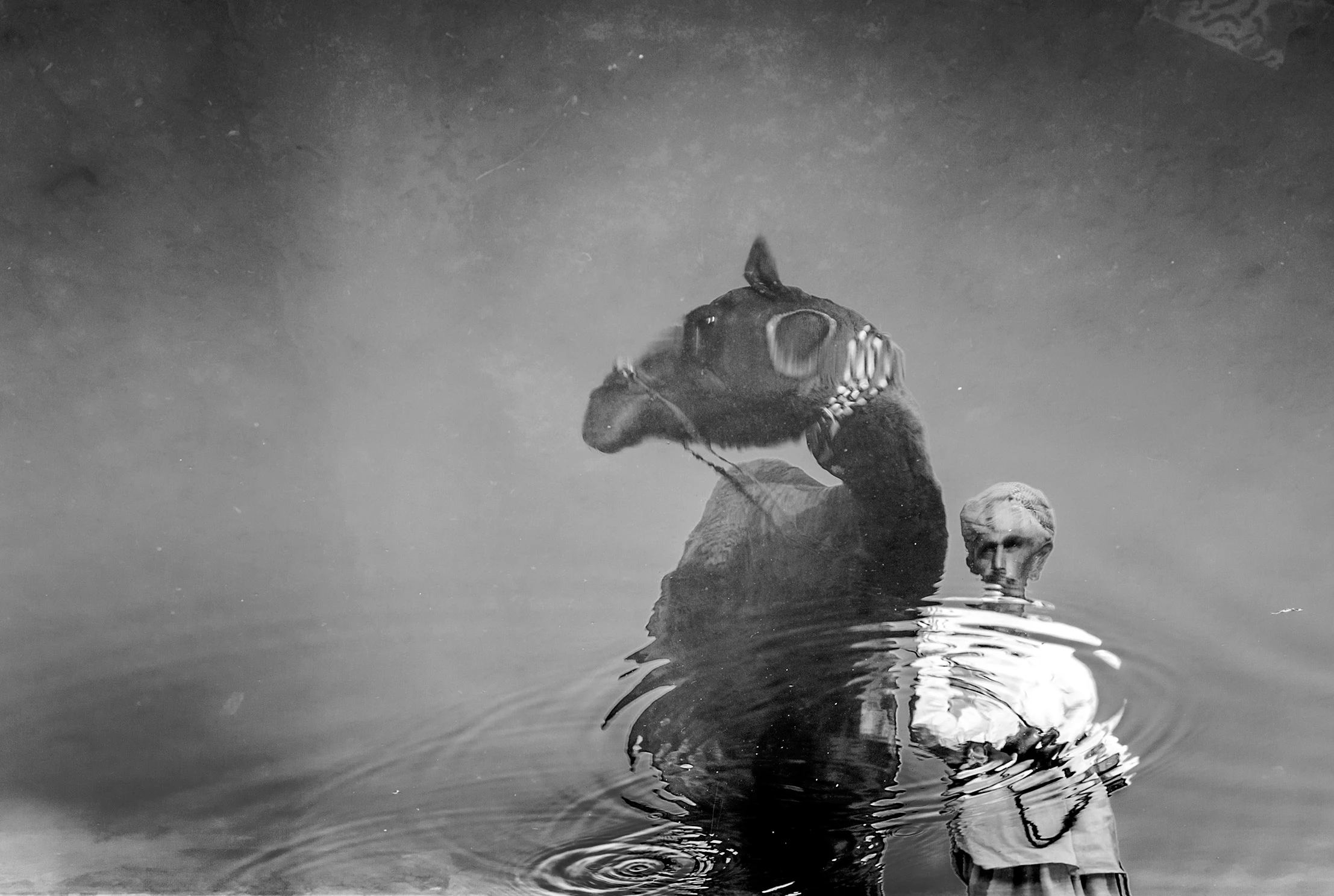
Antes de presentar al camello en el mercado, el pastor realiza los rituales del cuidado: el esquilado, en el que traza patrones geométricos sobre el pelaje, y el adorno con cuentas colgadas al cuello que identifican al clan igual que un apellido.
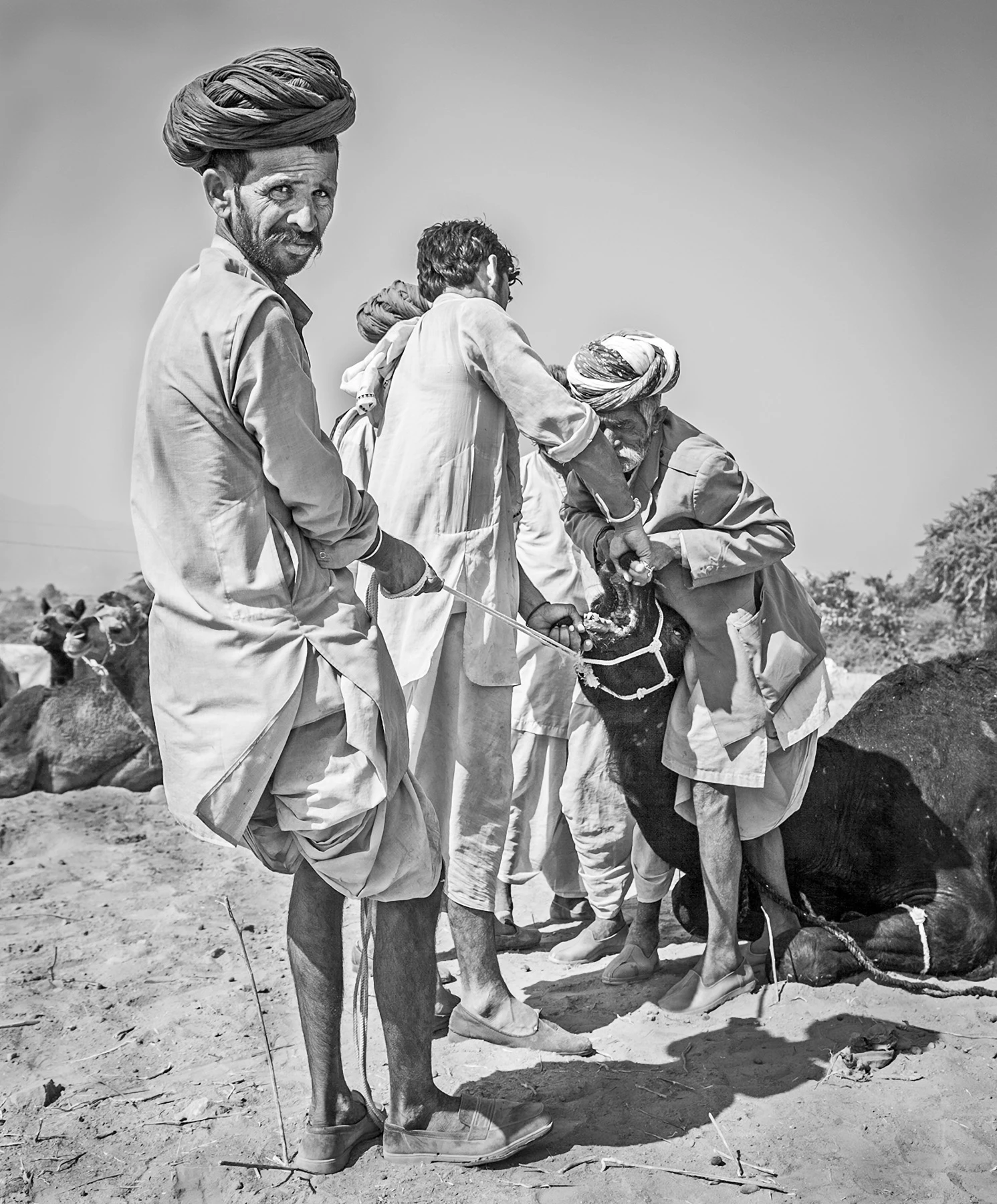
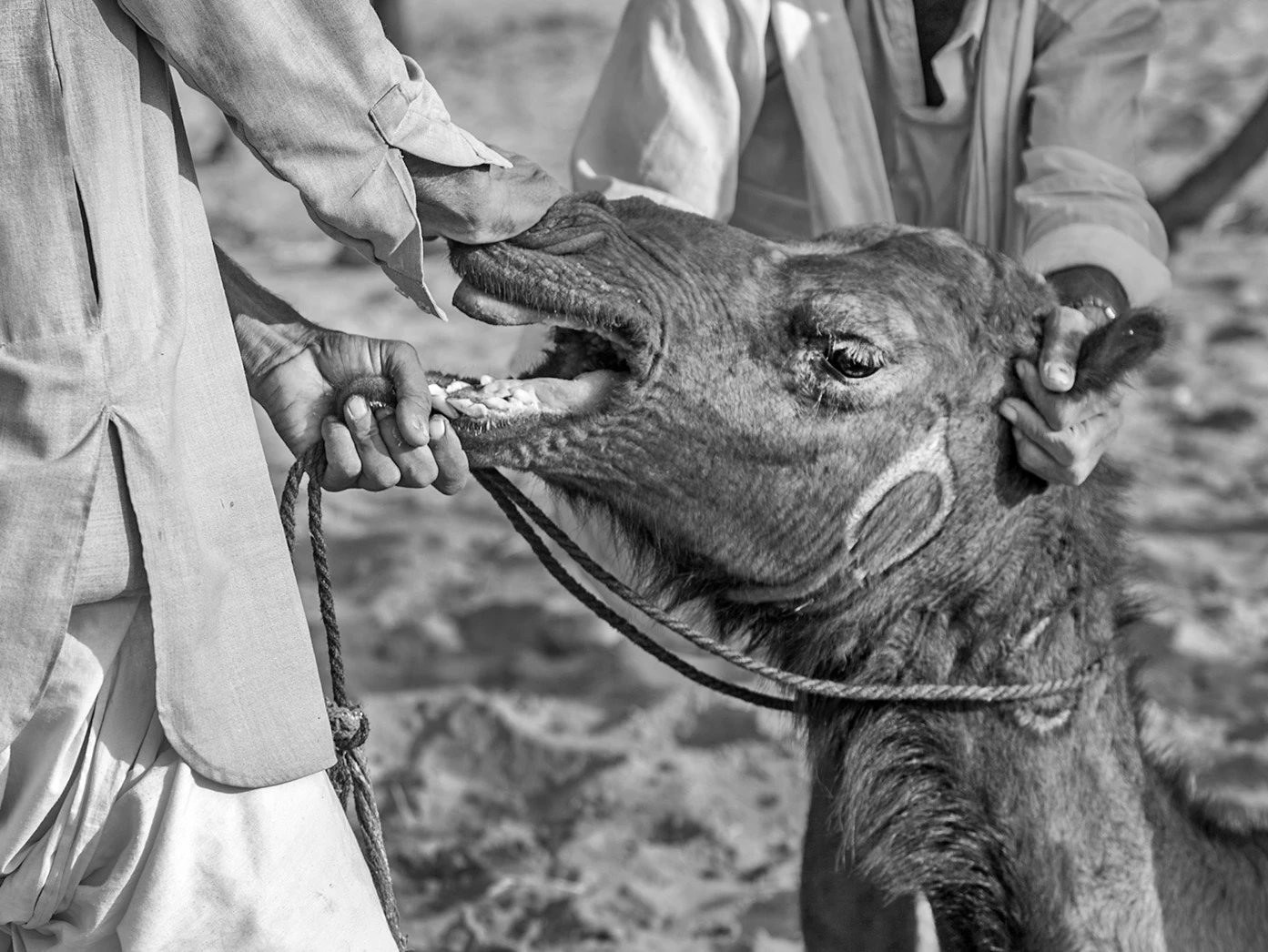
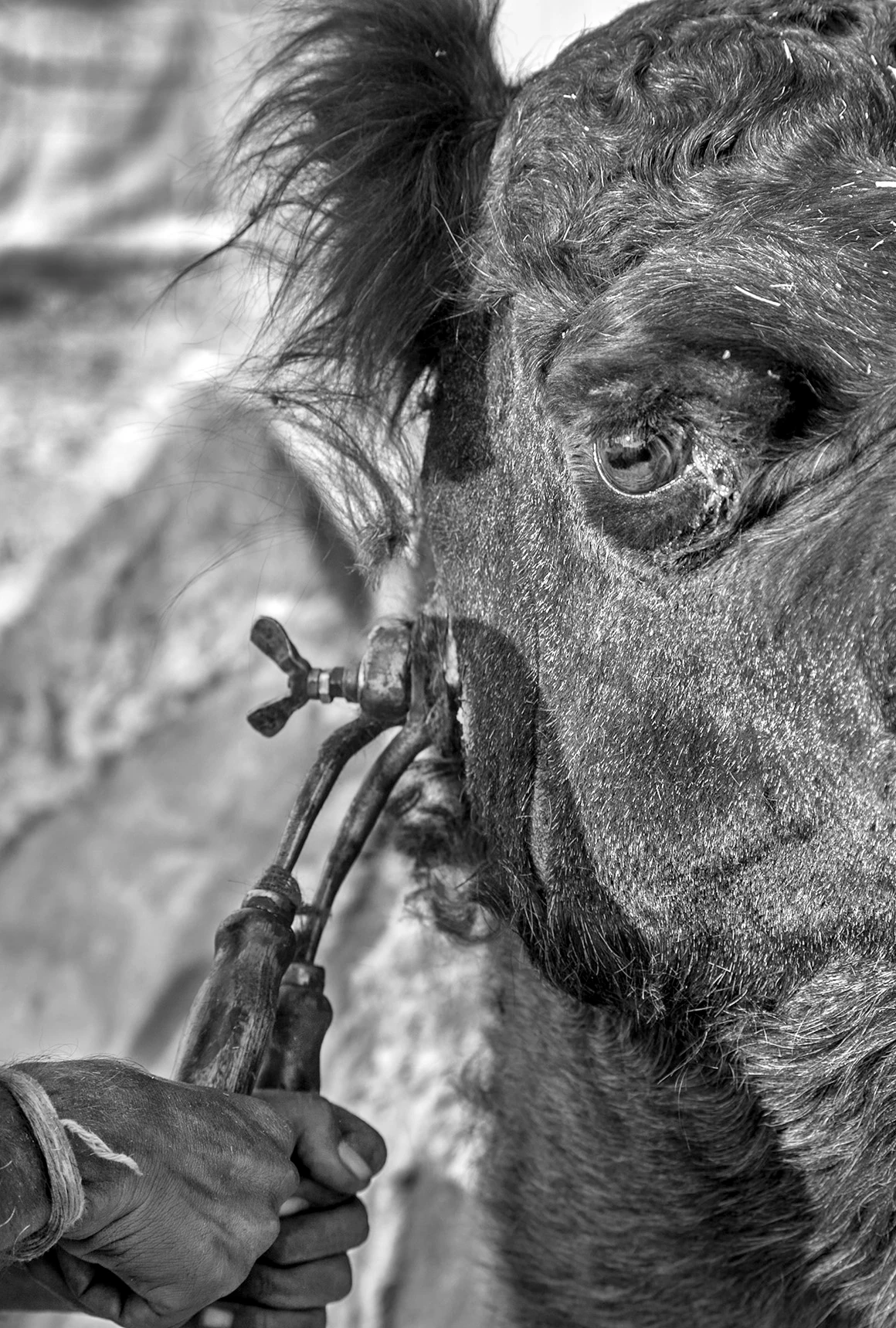
Otra figura central en la feria es el ojeador, el hombre que ha hecho de la valoración un arte. Se acerca al animal, se detiene, y lo examina con calma: los ojos, los dientes, la joroba, el paso. Sus manos recorren el cuerpo del camello con la precisión de quien sabe exactamente qué está buscando. Lo que hace en minutos le ha llevado décadas aprender. Cada animal presentado en la feria es el resultado de meses, a veces años, de cuidado constante. Cada trato cerrado lleva la garantía y la reputación familiar que muchas veces supera en años la vida del hombre que lo firma.
La feria termina igual que empezó. Los Raikas recogen sus mantas, apagan sus fogatas y vuelven al desierto por el mismo camino de arena. El mismo que sus padres recorrieron. El mismo que recorrerán sus hijos, si el desierto y el tiempo lo permiten.
On the horizon of the Thar Desert, at dawn, elongated silhouettes crowned with turbans begin to emerge across the sand, silhouettes moving slowly forward. They are the Raikas, nomadic herders who have walked this same path for generations.
They are heading toward Pushkar, home to the largest camel fair in the world. They arrive from distant villages, and before sunrise they have already set up their camps among the dunes surrounding the sacred city: an ephemeral settlement of carts and blankets stretched like tents, with fires burning and a life of its own for an entire week. The fair begins with their arrival.
Before presenting the camel at the market, the herder performs the rituals of care: the shearing, during which geometric patterns are carved into the animal's coat, and the adornment of beads hanging around its neck, identifying the clan much like a surname.
Another central figure at the fair is the scout, the man who has turned appraisal into an art. He approaches the animal, pauses, and examines it calmly: the eyes, the teeth, the hump, the gait. His hands move across the camel's body with the precision of someone who knows exactly what he is searching for. What he does in minutes has taken decades to learn. Every animal brought to the fair is the result of months, sometimes years of constant care. Every deal sealed carries the guarantee and family reputation that often outlives the man who signs it.
The fair ends the same way it began. The Raikas gather their blankets, extinguish their fires, and return to the desert along the same sandy path. The same one their fathers once traveled. The same one their children will travel, if the desert and time allow it.